

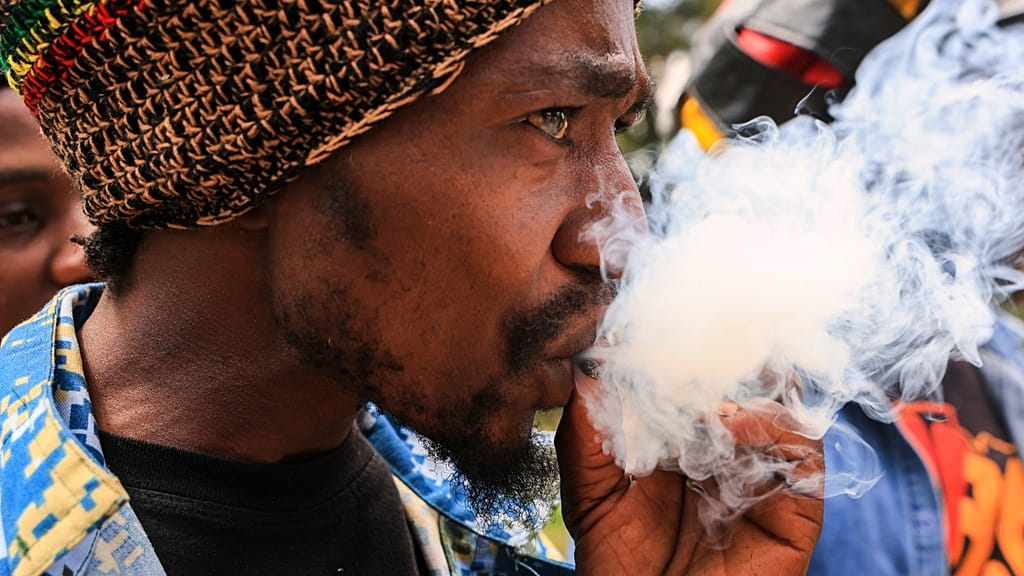
Rastafarians in Kenya express disappointment and a determination to appeal, after a court refused to grant them the right to smoke weed on religious grounds on Wednesday
The community had been pushing Kenyan courts since 2021 to allow them to use the herb under the constitutional right to freedom of religion. In front of the High Court in Nairobi, some Rastafarians were trying to come to terms with their defeat.
“We will not lose hope,” said 55-year-old Ras Wambua, a spokesperson for the Rastafari Society of Kenya.
“We will continue to pursue our rights, because when you see one door has been closed, we believe other doors have been opened,” he added.
In front of the judges, Rastafarians attempted to emphasise their use of cannabis in their religious meditations.
But the High Court ruled the community had failed to show that marijuana was a necessary part of their practice, and so did not give them the right to bypass the country’s drug laws, under which possession is punishable by up to 10 years’ imprisonment and a substantial fine.
While all witnesses “agreed that cannabis is used as a sacrament, they could not agree on whether its use is essential or merely preferred,” the judge said in his rulig.
One of the petitioners, Ras Dimo, 40, told AFP the judgement reflected “the laws of oppression, colonial laws that want to put African spirituality down.”
“Rastaman just wants to burn this holy plant so that the incense can rise to the Almighty,” he added.
The community’s lawyer said they would appeal the decision.
Rastafarianism emphasises mysticism, Pn-Africanism, and vegetarianism, and is thought to be growing in Kenya, especially among young people.
Despite ruling against the community, the judge said the widespread recreational use of cannabis in Kenya suggested the current law was too harsh.
“It is beyond dispute that use of cannabis in this country has become ubiquitous and has arguably been so for many decades,” he said, even quoting from Peter Tosh’s seminal reggae song, “Legalize It”, including the lyrics: “judges smoke it, even lawyers do”.
The “status quo appears untenable,” the judge said, and there should be “a full and frank conversation on cannabis and whih direction we should take.”
The community has a special bond to Kenyan history because of their tradition of wearing dreadlocks. They were also worn by many Mau Mau, Kenya’s independence fighters who fought against British colonial rule in the 1950s and 1960s. But Rastafarians say the country’s drug law is regularly used by police to harass them.
The east African country effectively recognised the movement in 2019 when a court ruled that expelling a school pupil because of her dreadlocks had violated her religious rights.
Although the Rastafari religion was formed in Jamaica in the 1930s, it has ties to east Africa, particularly since its members see former Ethiopian emperor Haile Selassie, who was crowned during the same period, as a second Jesus Christ come to save black people.
© 𝐄𝐚𝐬𝐭𝐚𝐟𝐫𝐢𝐜𝐚𝐧𝐫𝐞𝐩𝐨𝐫𝐭.𝐜𝐨𝐦