
Kenya
The continent’s public health agency, Africa CDC, on Friday shared the travel path taken by a Kenyan who died of Ebola in Nairobi on Monday.
It said the 40-year-old’s recorded body temperatures at various screening points between the Democratic Republic of Congo and Kenya, via Uganda, remained within the normal range.
“During this movement they didn’t suspect that he is an Ebola case. Initially, some of skin infections, some sore throat, some of the malaise and he kept moving from one place to another,” said Africa CDC emergency preparedness and response chief, Dr Wessam Mankoula.
Officials are now urging people who develop symptoms to promptly seek medical care as efforts to trace those who came into contact with him continue.
“If you start developing symptoms and you are moving from one place to another, please seek medical care. This is not only to prevent the movement of disease from one to another but also for your own protection,” he said.
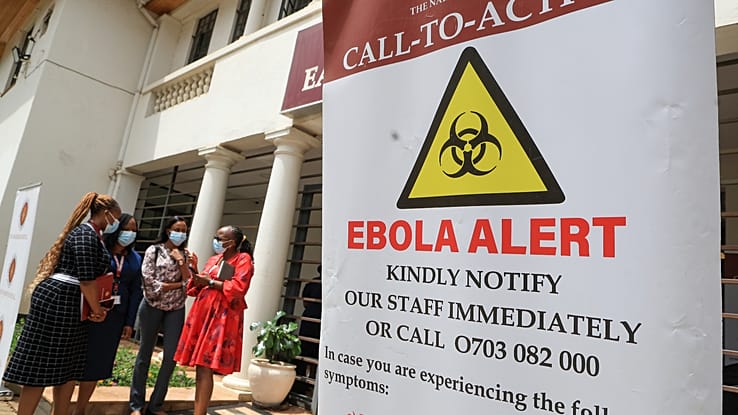
Kenya has stepped up public health messaging on Ebola prevention and established an emergency hotline for people who experiencing symptoms related to the haemorrhagic virus.
Mankoula said the agency was not saying that there is an outbreak of Ebola in Kenya.
“This is an imported case. We will say we have an outbreak when we start having local transmission, so we have a strong window of opportunity here in Kenya,” he said.
The Health Ministry has increased preparedness measures and called on churches to help raise public awareness, promote preventive practices, and encourage early reporting of suspected cases.
Assistant Minister of Health, Mary Muthoni, has urged Kenyans to remain calm.
“Get your information only from official Ministry of Health channels. Avoid touching the body fluids of sick people and bodies, [of] those who have died from unknown illnesses,” she said.
Mutoni added that the government has intensified contact tracing, surveillance at points of entry, public communication, and preparations for possibly isolation and treatment.
Ebola is highly contagious and spreads through direct contact with the bodily fluids of an infected person, including blood and vomit, or with contaminated materials and surfaces, such as bedding and clothing.
The current outbreak was declared in mid-May in Congo, where it has since spread across multiple health zones.
At least 8,400 cases have been recorded, including more than 4,000 deaths, according to government data, making it the fastest-growing Ebola outbreak on record.