𝐄𝐚𝐬𝐭𝐚𝐟𝐫𝐢𝐜𝐚𝐧𝐫𝐞𝐩𝐨𝐫𝐭/𝐑𝐚𝐝𝐢𝐨/𝐓𝐕
Opinion by Vital Munyurangabo,member of FDU-Inkingi
Thirty years after the 1994 genocide against the Tutsi, Rwanda is often presented as a model of post-genocide recovery. Under President Paul Kagame, the government has built its legitimacy around national unity, reconciliation, security and development.
Official statistics appear to support this narrative. The 2024 Unity and Reconciliation barometer reported that 94.7% of Rwandans support national unity, compared with 82.3% in 2010 and 92.5% in 2015. Yet these figures raisead per political question: reconciliation be considered genuine when the state largely determines which memories may be expressed, which historical interpretation legitimate and which forms of dissent are treated as threats?
The issue is not whether Rwanda needs reconciliation. It does. The genocide against theTutsi must remain central to the country’s historical memory, and genocide ideology must be firmly rejected. But reconciliation cannot mean political conformity. It cannot require citizens to accept a single official narrative or remain silent about abuses committed by state actors and armed groups during Rwanda’s complex history
Under Kagame’s authoritarian system, the language of unity has increasingly been used to consolidate political power. Critics, opposition leaders, journalists and activists are frequently portrayed as enemies of national cohesion, genocide deniers or threats to national security. In this context, accusations of “genocide ideology” risk becoming political labels rather than carefully established legal findings.
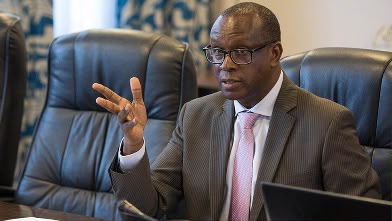
Several controversial remarks were made on 21 February 2026,during an address to Rwandans participating in discussions in Paris aimed at promoting solidarity within the diaspora. The recurrence of such statements in sensitive contexts raises broader questions about the government’s approach to national unity and reconciliation.
These remarks should not be viewed in isolation. Over several years, the minister responsible for national unity and reconciliation has made similar interventions, particularly during genocide commemorations and other politically significant events. Critics have argued that some of his statements contribute to the stigmatisation of Hutu communities by associating
them with “genocide ideology”, while also portraying opponents of the Rwandan Patriotic Front (RPF), critical journalists and human rights defenders as being linked to the same ideology.
During these interventions, the minister reportedly warned supporters of Victoire Ingabire Umuhoza against regarding her simply as a political opponent, instead portraying her as a terrorist seeking to harm the state.
Such statements are particularly concerning when made by a senior government official responsible for national unity and reconciliation. They raise questions about respect for the presumption of innocence,these oparation of power send the independence of the judiciary. In acountry governed by the rule of law, public officials should exercise particular restraint when committing on individuals involved in ongoing judicial proceeding.
The timing of the remarks was especially sensitive, as Ingabire’s Supreme Court she aring was reportedly scheduled only ten days later. Public statements by senior officials concerning an individual whose case is before the courts may be perceived as exerting political pressure and could undermine public confidence in the independence and impartiality of the judiciary.
Justice must remain independent from political influence and public authorities should refrain from statements that could appear to prejudge judicial outcomes. Agovernment committed to national unity and reconciliation should ensure that political rhetoric does not undermine the rights of political opponents or compromise public confidence in judicial institutions.
Reconciliation also requires rejecting collective blame. The Interahamwe were a political militia linked to the MRND; they were not synonymous with the entire Hutu population. Criminal responsibility must be individual. It must be based on evidence, personal conduct and organisational responsibility-not on ethnicity or political association.
Any rhetoric that treats Hutu identity as in herently suspicious risks reproducing the very divisions that reconciliation is supposed to overcome. The government cannot simultaneously claim that ethnic categories no longer matter while repeatedly invoking them to stigmatise section so population.National unity cannot bebuilt through humiliation, fear or selective remembrance.
Rwanda’s history is not simple. It includes the genocide against the Tutsi, the crimes committed by extremist forces,the violence of the revolutionary period,crimes committed
during and after the civil war,and abuses attributed to different armed actors.Recognising this complexity does not minimise the genocide. On the contrary, it is essential to building a historical memory based on truth rather than political convenience.
The central problem is therefore institutional. Reconciliation cannot flourish where one party dominates political life, where criticism is treated as disloyalty, where the judiciary is perceived as vulnerable to executive pressure and where public officials can define who belongs to the nation.
A stable country is not necessarily a free country. Rwanda’s political stability should not be confused with democratic legitimacy. Genuine national unity requires independent institutions,equal justice,freedom of expression and the righ to challenge those who empower without fear of imprisonment, intimidation or public vilification.
Rwandan faces adecisive choice.It can continue presenting reconciliation as agovernment achievement measured by official statistics, or it can create the conditions for an inclusive process grounded in truth, accountability and equal dignity.
True reconciliation does not require silence. It requires the freedom to remember, to question and to speak.If the vocabulary of unity is used to excluded issent,then reconciliation becomes not a path toward healing, but an instrument of political control.