
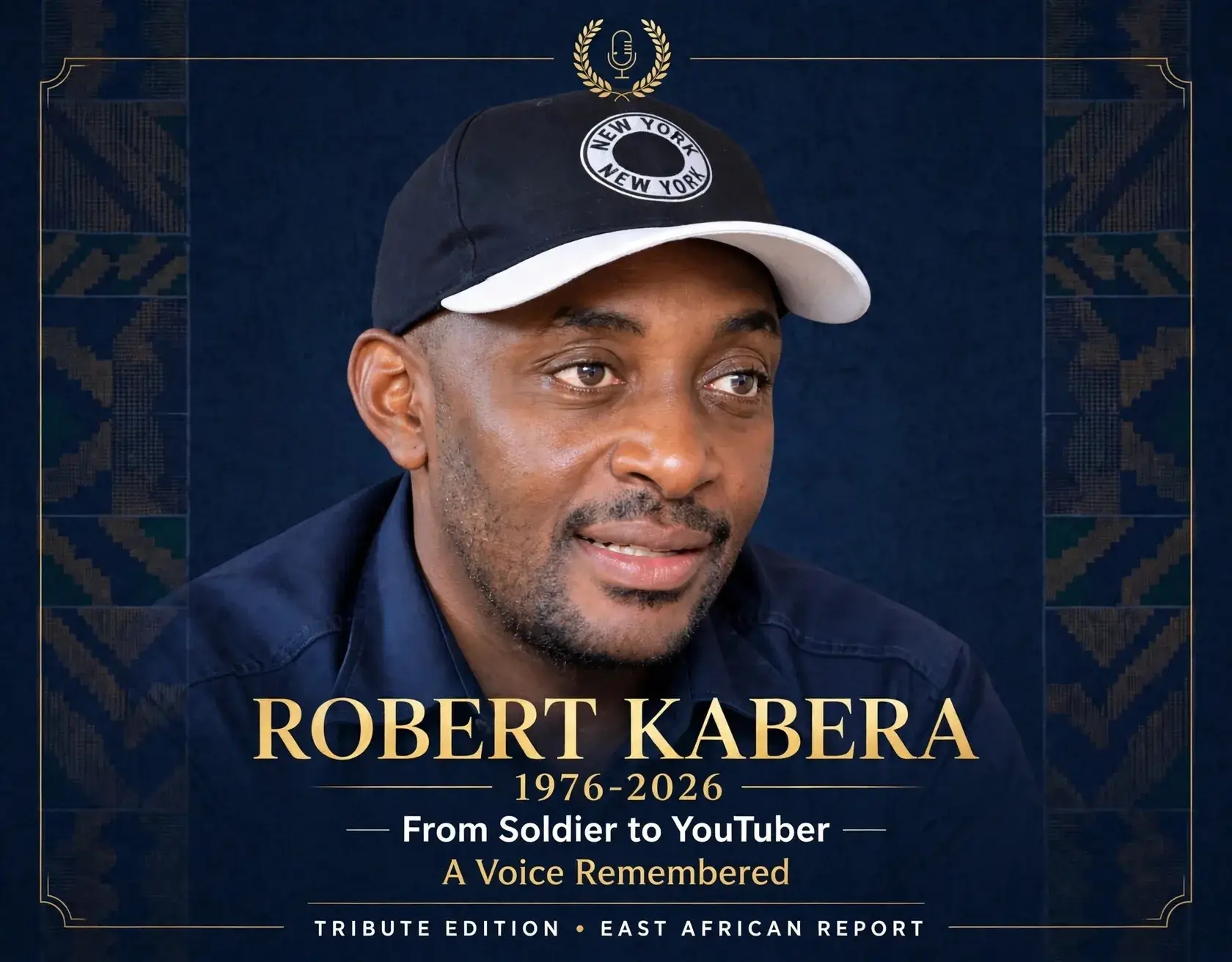
25 days after Robert Kabera was found beheaded in Mpigi, only 3 outlets did real investigation. The rest copied police statements. Here is what was actually found.
Mpigi, Uganda – One month after former Rwandan soldier Robert Kabera was found beheaded in Mpigi District, Uganda, dozens of news sites have published his name. Very few have actually investigated his death.
A review of coverage published between 17 October and 13 November 2026 shows a clear divide: three organisations did original investigative work. The rest republished police statements, wire reports, or each other.
Kabera, 50, popularly known as “Sergeant Robert” and “Major Robert,” was found dead on 17 October 2026 in a eucalyptus plantation in Luwala village, Kamengo Sub-county. His head had been removed and had not been recovered at the time of the latest public reports.
Ugandan police confirmed the discovery. Superintendent of Police Lydia Tumushabe told the Associated Press: “The head, up to now, is still missing.”
National police spokesperson Kituuma Rusoke said: “We recovered the body minus the head. He was identified as Robert Kabera by his relatives.”
That was the starting point. What happened after that separates reporting from investigation.
1. Human Rights Watch – The Only Forensic Investigation
Human Rights Watch (HRW) conducted the most detailed independent investigation into Kabera’s death.
researchers interviewed family members, reviewed photographs and three videos of the body, and consulted a forensic expert who examined the available visual evidence.
Their findings, published in November 2026, went far beyond the police statement:
– Kabera’s hands appeared to have been tied behind his back.
– The head appeared to have been removed after death, not as the cause of death.
– There were signs of beating and possible strangulation before death.
– The body was found in a location where Kabera had reportedly been building a house.
HRW did not assign responsibility for the killing. It called for a prompt, independent and transparent investigation by Ugandan authorities, and for the protection of witnesses and family members.
No other international organisation has published forensic analysis of this case to date.
2. East African Report – The Only Sustained Follow-Up
East African Report published the only sustained follow-up coverage of the case in East Africa.
Its reporting, based on a review of police statements, family accounts and public records, established several facts that were not in the initial wire reports:
– Seven witnesses had been questioned by police in connection with the case.
– The forensic and postmortem findings had not been made public by 9 November, more than three weeks after the killing.
– No arrest had been publicly confirmed 25 days after the body was found.
– Uganda’s Chief of Defence Forces, General Muhoozi Kainerugaba, had publicly suggested on 27 October that elements linked to the Rwanda National Congress (RNC) could have been involved, without providing public evidence.
East African Report also documented competing political claims around the case, including the RNC’s denial of involvement and the Rwandan government’s silence on the killing, while noting that none of these claims had been proven by investigators.
3. Daily Monitor – The Only Ugandan Follow-Up
Daily Monitor, Uganda’s leading independent newspaper, provided the most consistent Ugandan follow-up.
It reported HRW’s forensic findings, tracked police statements, and provided background on Kabera’s flight from Rwanda in 2020.
According to Daily Monitor’s reporting, Kabera fled Rwanda after expressing fears for his safety. The Rwanda Defence Force said in November 2020 that it had launched investigations into allegations of unlawful sexual contact involving Kabera, and that efforts to trace him were underway.
Kabera later became an outspoken critic of Rwandan President Paul Kagame while living in Uganda.
Daily Monitor did not claim to have solved the case. It reported what was known, what was unproven, and what police had not yet answered.
4. The Rest – Reporting, Not Investigation
The following outlets published reports on Kabera, but their coverage was based on police statements or wire reports, not original investigation:
– Associated Press (AP) – First international wire report. Based on police interviews.
– Agence France-Presse (AFP) – Interviewed Kabera’s brother, Victor Agaba. No forensic work.
– Al Jazeera – Synthesised AP, AFP and HRW reporting.
– BBC – Short report based on police confirmation.
– Nation (Kenya) – Republished AP reporting.
– Pulse Uganda – Republished police statement.
– Gambian News / Newsarchy – Aggregated other reports.
None of these outlets published new forensic evidence, interviewed witnesses independently, or obtained documents that were not already public.
This is not a criticism of wire reporting. Wire reporting is essential for breaking news. But wire reporting is not investigation.
5. The 40+ Outlets That Did Nothing
No investigation on Kabera was published by Daily Maverick, Premium Times, Mail & Guardian, Africa Uncensored, CENOZO, or dozens of other African investigative outlets.
That absence matters. It means that a killing with clear political implications – a former soldier and government critic found beheaded, his head missing, his hands reportedly tied – received sustained investigative attention from only three organisations.
For readers in Uganda, Rwanda and the wider East African region, that leaves critical questions unanswered.
Five Questions Still Open
As of 13 November 2026, these questions remain publicly unanswered:
1. Has the postmortem examination been completed, and what does it establish about cause and timing of death?
2. Has the missing head been recovered?
3. Have investigators identified the last people to see Kabera alive?
4. What is the official motive, if any has been established?
5. What evidence, if any, supports the claim that the RNC was involved?
Until Ugandan authorities release forensic findings and confirm arrests, conclusions about who killed Robert Kabera should be treated with caution.
Why This Matters
The difference between reporting and investigation is not academic. Reporting tells the public what police said. Investigation tests whether what police said is complete, accurate, and supported by evidence.
In the Kabera case, reporting told the world a man was found beheaded. Investigation revealed his hands were tied, his head was removed after death, and 25 days later, no one had been publicly arrested.
That is why only three organisations can credibly claim to have investigated this case – and why the public still needs answers.
Sources: Human Rights Watch, Uganda Police, Associated Press, AFP, Daily Monitor, East African Report