
By :Eric Dusenge| East African Report| Confirmed Sweden Desk|
Nairobi / Kampala — 24 November 2026
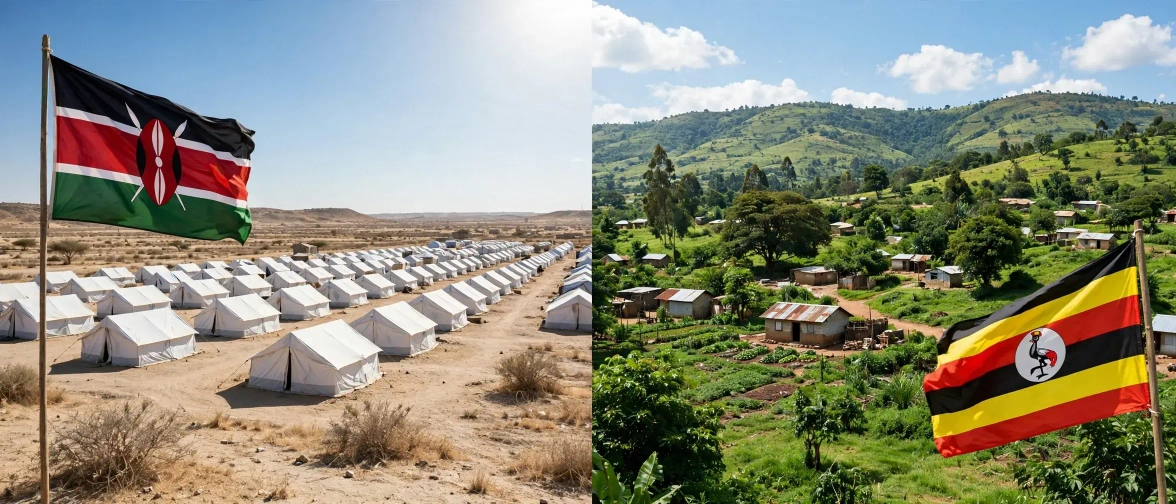
Kenya and Uganda are neighbours, partners in the East African Community, and two of the largest refugee-hosting countries in Africa. But new figures released by UNHCR, the UN Refugee Agency, show a gap so wide that it has reignited debate across the region: who really hosts refugees better?
The answer, according to the numbers, is surprising.
Uganda: Number One in Africa
Uganda now hosts 2,061,006 refugees and asylum-seekers, making it the largest refugee-hosting country in Africa.
The majority are South Sudanese (52%) and Congolese (33%). Women and children make up 77% of the population, with more than one million refugee children living in Uganda.
Uganda’s approach is widely regarded as one of the most progressive in the world. Under its 2006 Refugee Act, refugees are granted freedom of movement, the right to work, the right to run businesses, and access to national schools and health facilities on the same basis as citizens.
Refugees do not live only in closed camps. They live in settlements alongside host communities, farm land, and participate in local economies.
Kenya: Far Behind in Numbers
Kenya hosts 847,780 refugees and asylum-seekers as of April 2026.
Most are in Dadaab (414,748), Kakuma and Kalobeyei (314,888), while 118,144 live in Nairobi, Mombasa, Nakuru and other urban areas.
In comparison, Uganda hosts almost 2.5 times as many refugees as Kenya.
Kenya works closely with UNHCR through the Department of Refugee Services (DRS). However, most refugees remain in the large camps of Dadaab and Kakuma, with limited freedom to move and work compared to Uganda.
Kenya has also faced a new emergency. Since 22 October 2026, an estimated 50,000 people have fled clashes in Ethiopia and crossed into Kenya at Moyale, creating urgent needs for food, water, shelter and protection.
The Shared Crisis: Funding
Both countries face the same crisis: not enough money.
For Uganda, UNHCR requested $361 million for 2026. As of October, only 25% had been received. The full Uganda Country Refugee Response Plan for 2026 needs $850 million.
For Kenya, UNHCR, IOM and UNICEF jointly appealed for $8.9 million to support the 50,000 new arrivals from Ethiopia in Moyale for three months.
In Uganda, the funding shortfall has already forced a 23% reduction in field operations, with only lifesaving interventions prioritised.
Conclusion: Numbers Tell One Story, Policy Tells Another
The figures show that Uganda is ahead in numbers. Its policy also allows refugees to live, work and integrate.
Kenya, while hosting far fewer refugees, continues to manage two of the largest refugee camps in the world and is now responding to a fresh influx at its northern border.
The question is no longer who hosts more. It is who can sustain it — and for how long — without international support.
East African Report| Sweden Desk