

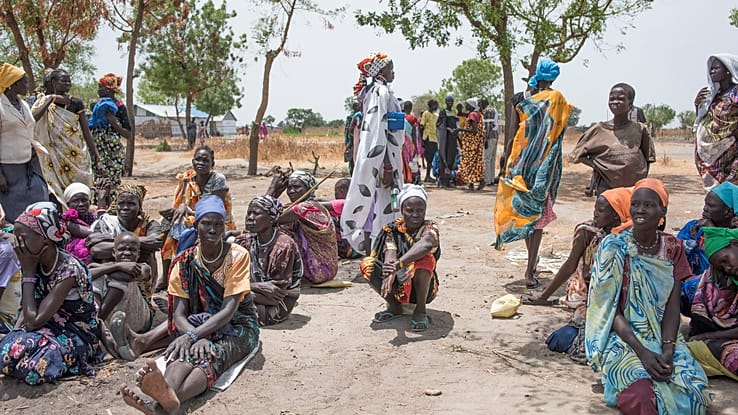
By: A Witness in Reception Kakuma | Confirmed by Sweden office |East African Report | Kenya — 15 November 2026
In Kakuma Reception Centre, there are more than 2,000 refugees. They have been there for more than 6 years.
They have no documents. They cook in the reception centre, and they wait for what is cooked. They have spent 6 years in the hands of Kenya, yet UNHCR does not know them.
There is a child who was born in reception. He is now 5 years old. He has spent all 5 years in reception — like a prisoner.
These refugees did not come from nowhere. They came from other camps — such as Uganda, Tanzania, and elsewhere. They had documents. Their documents were taken from them — documents showing that they came from other camps. Now they have no documents.
The witness asks: If UNHCR exists in Kenya, why has it done nothing for 6 years? If the Government of Kenya has refused to allow UNHCR to take these refugees, what benefit does President Ruto have? If the Government of Kenya has no law, does UNHCR have no law?
He also asks: If UNHCR is now receiving refugees from Ethiopia, will they also spend 6 years wandering in reception centres like those in Kakuma? If UNHCR knows this problem, what has it done? Does UNHCR have no lawyers who can take this case to court against the Government of this country?
And: If Kenya wants to continue eating UNHCR money, let it find another way and release these prisoners in reception who have spent more than 6 years. And in law, no refugee stays more than 6 months in reception. What then, when it becomes years?
These are the 12 questions the witness asks. This is one story — no repetition.
WHAT THE LAW SAYS — AS STATED ON UNHCR AND KENYAN GOVERNMENT WEBSITES
1. KenyanLaw — Refugees Act, 2021
Section 24: A person who enters Kenya to seek asylum must declare his or her intention immediately upon entry or within 30 days — by reporting to the nearest reception centre or the nearest government administrative office.
Section 23: A person who has applied for refugee status must be issued with a temporary pass — valid for 90 days — as evidence that he or she has applied for refugee status in Kenya.
Section 28: Refugees and asylum seekers have the right to be issued with identity documents and identification documents — documents sufficient to identify them so that they can access rights and assistance.
Definition in the Act: “Reception area” means an area designated for receiving and processing asylum seekers — including registration and determination of their applications.
What this means: Reception is a place for receiving and processing — not a place to live for 6 years. The law speaks of registration within 30 days, a pass valid for 3 months, and documents. The 2,000 people have none of these.
2 . UNHCR Kenya — How Registration Works
UNHCR Kenya states that: a person seeking asylum must present himself or herself to the offices of DRS — Department of Refugee Services — immediately after entry or within 30 days.
UNHCR further states that: registration is essential — because it is the basis for the right to stay in Kenya in a lawful manner — and it protects against forced return to the country of origin.
UNHCR describes the steps: New arrivals go to the Camp Manager’s office — they are sent to Kakuma or Kalobeyei Reception Centre — where they are accommodated — then they are taken to Field Post 2 for registration with DRS — then they return to the Reception Centre — and wait to be relocated to the community.
What this means: UNHCR itself says that after registration — people are relocated to the community. The 2,000 people were not relocated — they have spent 6 years in reception.
3 . The 1951 Refugee Convention — Article 31
Article 31 states: States shall not impose penalties, on account of their illegal entry or presence, on refugees who, coming directly from a territory where their life or freedom was threatened, enter or are present in their territory without authorization, provided they present themselves without delay to the authorities and show good cause for their illegal entry or presence.
Article 31 (2) further states: States shall not apply to the movements of such refugees restrictions other than those which are necessary, and such restrictions shall only be applied until their status in the country is regularized or they obtain admission into another country.
What this means: Keeping people for 6 years in reception — without registration — without documents — is a penalty. And it is a restriction on movement beyond what is necessary — because their status was never regularized.
4 . The International Standard for Reception — 6 Months
ECRE — European Council on Refugees and Exiles — states that the time spent in a reception centre should be as short as possible — and should not exceed 6 months.
It states: A long stay in a reception centre can lead to a life of dependency on the State — loss of independence — rejection by the host society — and unnecessary dependence on State assistance.
What thisprisoner :When international standards say 6 months — and people have spent 72 months — they have exceeded it 12 times. This is a legal issue — not only a humanitarian issue.
5 . The Rights of the Child — The Best Interests of the Child
Kenyan law — Children Act, 2022 — and the Convention on the Rights of the Child — state that the best interests of the child must come first — without discrimination. A child born in reception — who is 5 years old — must be registered — must go to school — must live a normal life — not in reception.
QUESTIONS THAT REMAIN
If 2,000 refugees have spent 6 years in reception — without documents — does asylum really exist?
If a child born in reception is 5 years old — like a prisoner — what is his crime?
If in law no refugee stays more than 6 months in reception — what is 6 years?
WHAT WE ASK FOR
- Registerthese refugees — now — without delay
- Returntheir documents to them — from Uganda, Tanzania, and elsewhere
- Removethem from reception — give them a place to live — give them a life
- Releasethe child born in reception — he is 5 years old — he is not a prisoner