
By : Eric Barry | Sweden Desk | Sweden Investigation Desk
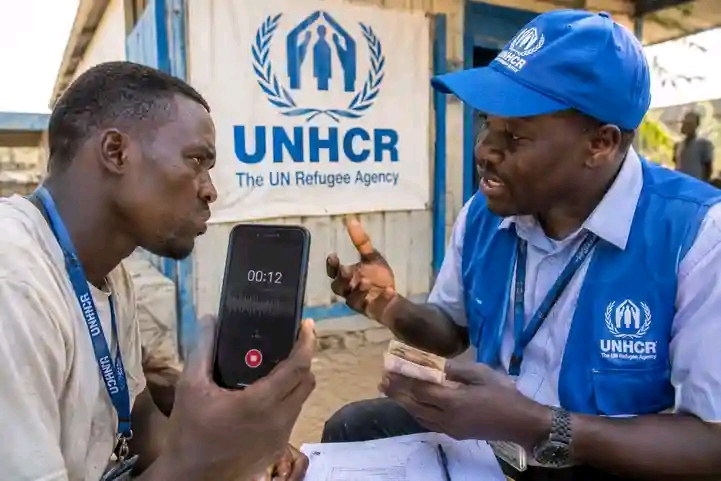
Kigali / Nairobi — Rwanda and Kenya are two of the largest refugee-hosting countries in Africa. Both work with UNHCR, the UN Refugee Agency, to protect people who fled war, persecution, and hunger. But new figures and new reports show that the two countries are living two very different realities.
One country is praised for inclusion and return. The other is struggling with overcrowded camps, funding cuts, and a new emergency.
This is the full comparison: UNHCR Rwanda vs UNHCR Kenya.
1. HOW MANY REFUGEES DOES EACH COUNTRY HOST?
RWANDA:
Rwanda currently hosts about 140,750 refugees and asylum-seekers, mainly from the Democratic Republic of Congo (DRC) and Burundi. They live in refugee camps, transit centres, and urban areas.
KENYA:
Kenya hosts 879,452 refugees and asylum-seekers as of September 30, 2026 — more than 6 times Rwanda.
The breakdown in Kenya:
– Dadaab: 434,824 people
– Kakuma: 325,824 people
– Nairobi and other urban areas: 118,144 people
The largest groups in Kenya are Somalis (487,274), South Sudanese (215,043), Congolese (67,477), and Ethiopians (43,434).
Conclusion: Kenya hosts far more refugees, but Rwanda hosts refugees in a smaller, more manageable system.
2. RWANDA: FOCUS ON RETURN AND SELF-RELIANCE
UNHCR Rwanda is now focused on two big ideas: Voluntary Return and Self-Reliance.
Voluntary Return:
On June 22, 2026, in Addis Ababa, UNHCR, Rwanda, and DRC signed a Joint Communique for the voluntary, safe, and dignified return of refugees.
The figures:
– DRC hosts 196,289 Rwandan refugees
– Rwanda hosts 84,456 Congolese refugees
– Since January 2025, almost 8,400 people have voluntarily returned from DRC to Rwanda
– The target for 2026 is 10,000 returns
UNHCR says: “No return will be forced.” Every return must be voluntary, safe, dignified, and informed.
Self-Reliance:
In November 2025, the EU, WFP, and UNHCR signed a 10 million Euro project to help 4,000 families — 3,200 refugee families and 800 host families — to move from aid dependence to self-reliance.
This is part of Rwanda’s Refugee Sustainable Graduation Strategy (2025-2030), which aims to help 50% of refugee households become self-reliant by 2030 through farming, business training, cash support, and toolkits.
On November 19, 2026, UNHCR’s Director of International Protection, Ms. Elizabeth Tan, visited Kigali and praised Rwanda:
> “Rwanda’s long-standing commitment to refugee protection and inclusion sets a powerful example.”
The Challenge in Rwanda:
UNHCR Rwanda is facing a serious funding crisis. It needs $77.5 million for 2026, but only 27% had been funded by January. That leaves a gap of $56.77 million — 73% unfunded. If donors do not come, assistance will be cut.
3. KENYA: FOCUS ON INTEGRATION, BUT CAMPS ARE OVERFLOWING
Kenya launched a historic plan called the Shirika Plan in March 2025, under President William Ruto.
The plan is ambitious: Turn Dadaab and Kakuma from refugee camps into municipalities — towns run by county governments, where refugees can live, work, go to school, and access health care like Kenyans.
In November 2025, Dadaab and Kakuma were officially gazetted as municipalities. Refugees were included in the national census for the first time. 107 UNHCR-supported schools were recognised. Refugees were included in Universal Health Coverage. Refugee ID cards now allow mobile money access.
The Shirika Plan needs $943 million until 2036.
But the reality is difficult:
– Kenya is recording at least 300 new refugees every day, most of them children. This is straining education in Kakuma and Dadaab.
– 1 in 3 refugees in Kakuma now receives no food assistance because of funding cuts.
– In Kakuma Reception Centre, 2,000 refugees have spent over 6 years without documents. A child born there is now 5 years old. UNHCR says registration must happen within 30 days. They have waited 72 months.
– Human rights groups say some “voluntary returns” to Somalia are not truly voluntary. MSF found 86% in Dagahaley do not want to return.
New Emergency in Moyale:
On October 18, 2026, fighting started in Moyale, Ethiopia. By November 3, 50,000 people had crossed into Kenya. By November 18, UNHCR had profiled 25,720 people in 7 sites. Women and children are the majority. UNHCR needs $8.9 million for 3 months just for Moyale — and it has not received it.
RWANDA vs KENYA: THE REAL COMPARISON
East African Report | Sweden Desk