

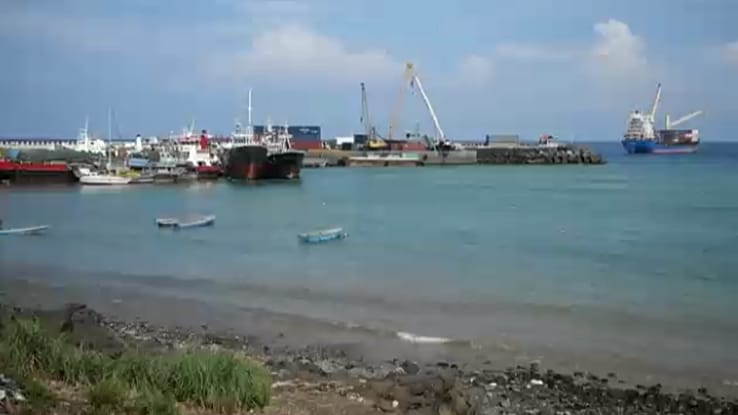
Port in the Comoros
UNESCO has added six medinas in the Comoros -some dating back to the 12th century – to its World Heritage List, raising hopes for their preservation.
The ancient cities of palaces, mosques, public squares, and narrow streets, as seen as examples of the characteristic monumental style of the archipelago’s sultanate era.
“This listing is not a finish line but a starting point,” said Comoros culture minister Said Mohamed Ali Said.
The medinas are the first sites from the Comoros to join the UNESCO list, which counts more than 1,200 properties around the world considered worth protection.
They “are not just historical sites for us, they are living towns, where people still pray, trade, and celebrate life’s great moments exactly as our ancestors did”, the minister said.
“This heritage is fragile and, in places, in real danger,” he said. “The listing changes things. It places obligations on us, but it also opens doors for us.”
The Comoros situated about 300 kilometres off the coast of Africa was for centuries a crossroads of maritime trade between east Africa, the Middle East and Madagascar.
Four of the inscribed medinas are on the main island of Grande Comore and two on the smaller island of Anjouan.
The 14th-century medina in the capital Moroni includes the emblematic Friday Mosque with its green minaret across from the dhow port. It is surrounded by paved alleyways and multi-storey houses, some with heavy, carved doors.
The small maritime Itsandra medina nearby is considered a cradle of Swahili civilisation.
Further south, the 12th-century Iconi medina houses the tomb of Prince Said Ibrahim, son of the last sultan of Grande Comore, Said Ali.
“The Comorian medinas were once home to historic sultanates. Unfortunately, uncontrolled urbanisation and ‘modernisation’ have altered them,” said heritage promotion office director general, Ania Mohamed Issa.
After the UNESCO inscription, “there will be the development of cultural, historical and architectural tourism, and the preservation of heritage,” said Faniya Abbas, of the Medina Wiratha cultural association.
The medinas have preserved their old urban shape, structures and traditions, according to UNESCO’s nomination, but the oldest structures “are highly vulnerable, with several cases in serious disrepair”.
© 𝐄𝐚𝐬𝐭𝐚𝐟𝐫𝐢𝐜𝐚𝐧𝐫𝐞𝐩𝐨𝐫𝐭.𝐜𝐨𝐦 /𝐑𝐚𝐝𝐢𝐨 / 𝐓𝐕


