
Iraq
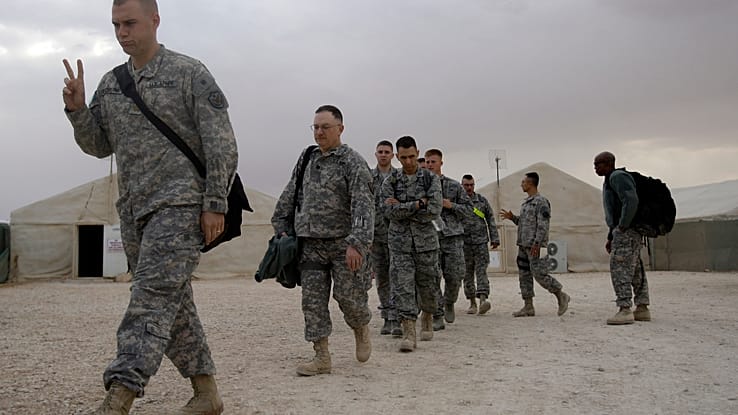
Two deadlines are looming for Iraq at the end of the month: the end of a decades-long U.S. military presence and the disarmament of non-state armed groups. The U.S. withdrawal is underway, and officials say the hundreds of troops remaining in northern Iraq will be out by the Sept. 30 deadline.
The Iraqi government has linked the U.S. withdrawal to an ultimatum for militias to lay down their weapons. But most have indicated they have no plans to do so. That leaves major questions about what the day after will look like in Iraq. Iranian-backed Iraqi militias have struck U.S.-linked targets both inside and outside of Iraq since the U.S. and Israel attacked Iran on Feb. 28.
They also have coordinated with Yemen’s Houthi rebels to attack Saudi Arabia. With the war between the U.S. and Iran raging, Tehran is unlikely to give up the leverage it has in neighboring Iraq. U.S. officials are concerned about the militias’ ability to continue carrying out attacks — but not enough to delay their withdrawal. U.S. troops invaded Iraq in 2003 to topple Saddam Hussein.
They departed in 2011, but three years later, Iraqi authorities invited a smaller U.S.-led mission to fight the Islamic State group, which had rampaged across Iraq, seizing large swaths of territory. With the group now reduced to scattered sleeper cells — a result of the intervention of Iran-backed militias as well as the U.S.-led coalition — the U.S. and Iraq agreed in 2024 to wind the mission down.
U.S. troops pulled out of bases in most areas of Iraq last year but maintained a presence in the semiautonomous northern Kurdish region. Meanwhile, Iraqi government officials have vacillated over whether Sept. 30 is a hard deadline for disarmament of militias or merely the starting point for negotiations. “There will be no disarming of any groups by the 30th of September,” said Iraqi analyst Sajad Jiyad, speaking at a panel convened by the Atlantic Center think tank last week. “I think that’s probably clear to anybody who watches Iraqi politics.”
A handful of less-influential militias have agreed to turn over their weapons. But the most powerful groups — and closest to Iran — Kataib Hezbollah, Harakat al-Nujaba and Kataib Sayyid al-Shuhada have rejected the prospect or set conditions for disarming that they know the government is unlikely to meet in the near future.
Those include bringing the Kurdish peshmerga security forces in northern Iraq under control of the central government’s military and expelling Iranian Kurdish dissident groups and the Kurdistan Workers’ Party, or PKK, that have bases in the region.
A government official said the government’s strategy currently focuses on bringing armed factions under the control of the Iraqi military. Already many of the militias are part of the Popular Mobilization Forces, a coalition of armed groups that is officially part of the Iraqi armed forces, although the individual militias often act on their own.