
Mpigi, Uganda — October 17, 2026
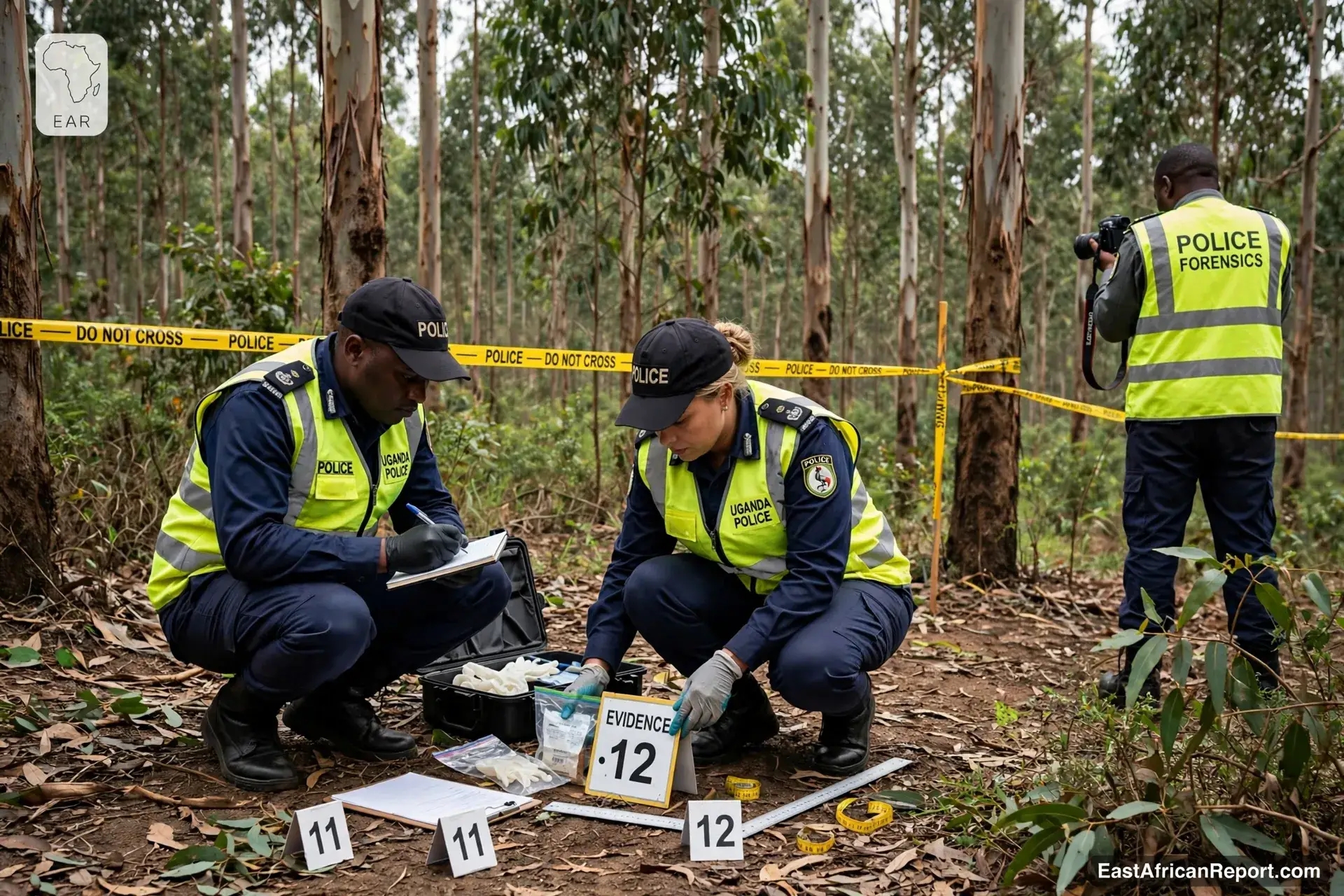
On the morning of Saturday, October 17, 2026, residents of Luwala village, in Kamengo sub-county, Mpigi District, discovered a body in a eucalyptus plantation near where the victim was constructing a house.
Uganda Police later confirmed that the body was that of Sergeant Major Robert Kabera, aged about 50, a former Rwanda Defence Force soldier, singer, and outspoken critic of the Rwandan government, popularly known as “Sergeant Robert” and “Major Robert.”
His body was found without a head. As of the latest police update, the head has still not been recovered. No suspect has been arrested, and no official motive has been established. The investigation is ongoing.
WHO WAS ROBERT KABERA?
Robert Kabera was a Rwandan national, a former Sergeant Major in the Rwanda Defence Force (RDF), a military music instructor, and a singer who was well known in the Army Jazz Band.
He fled Rwanda on November 19, 2020, claiming persecution and threats to his life on political grounds. He sought asylum in Uganda, and in May 2023, the Inspector General of Uganda Police confirmed in a letter to Human Rights Watch that Kabera had been granted asylum in Uganda on the basis of his claims of political persecution, was being provided with additional security by police and security forces, and was in the final stages of resettlement to a third country.
In Uganda, Kabera became a prominent YouTuber and critic. He ran a channel known as Major Robert TV, where he regularly posted videos criticizing the Rwandan ruling party, speaking about alleged crimes, and describing the threats and persecution he said he faced since fleeing to Uganda.
Days before his death, he published a video on YouTube titled “Kill Us if You Want,” in which he spoke about the threats he had received and the persecution he said he continued to face in exile.
WHAT HAPPENED ON OCTOBER 16-17, 2026?
According to Uganda Police:
The killing is believed to have occurred on the night of October 16, or in the early morning of October 17, 2026. The body was discovered on October 17 and reported to police the same day.
Police spokesperson Kituuma Rusoke said: “Up to now the head has not been recovered. We recovered the body without the head. The killers went with the head.”
Officers transferred the remains first to Gombe Hospital, then to Mulago City Mortuary for examination. A postmortem examination was requested by police, and a forensic examination was conducted in Wandegeya, Kampala. The full postmortem results have not yet been made public.
The victim was identified by relatives, including his brother Victor Agaba, and by local residents who knew him.
Witnesses provided videos showing Kabera’s body being transferred from a vehicle onto a trolley in a hospital. A forensic medical expert who reviewed photographs and videos for Human Rights Watch said the body was likely mutilated after death, and that ligature marks on the wrists suggested his hands may have been tied behind his back at the time of death. The unnatural position of his shoulders seen in the images also suggested restraint.
HE HAD WARNED THAT HE WOULD BE KILLED
Kabera had reported to Human Rights Watch multiple times that he had been threatened and attacked in Uganda.
In a September 2022 interview with Human Rights Watch, Kabera said: “They will kill me. They know where I am… I will die before I get resettled.”
Human Rights Watch documented his security concerns in its October 2023 report on Rwanda’s treatment of critics abroad.
Kabera faced arrest and multiple physical attacks in Uganda. On May 16, 2022, dozens of Ugandan security officers raided his home, according to Human Rights Watch. He was arrested and detained, and later released.
Despite police assurances of protection, he was killed before his resettlement to a third country could happen.
WHAT HUMAN RIGHTS WATCH IS DEMANDING
On October 22-24, 2026, Human Rights Watch called on Ugandan authorities to conduct a prompt, impartial, and credible investigation into Kabera’s killing, and to examine all evidence pointing to a possible politically motivated killing.
Human Rights Watch said:
“Ugandan authorities’ obligation to conduct an effective investigation into the brutal killing of a Rwandan dissident requires examining all evidence that points to a possible politically motivated killing.”
The organization said there are many reasons to treat Kabera’s death as suspicious, foremost that he was an outspoken critic of the Rwandan government.
Human Rights Watch also noted that Kabera’s case fits a broader pattern of threats, attacks, and killings against Rwandan critics living abroad, which it has documented for years.
THE ALLEGATIONS IN RWANDA
On November 23, 2020, four days after Kabera said he left Rwanda, the Rwanda Defence Force Military Prosecution Department issued a news release announcing an investigation into “defilement allegations” against Kabera, alleging that the crime was committed on November 21, 2020.
Kabera consistently denied the allegations, saying they were politically motivated and were fabricated after he fled.
No court has convicted him of those allegations. The allegations have never been proven in a court of law.
OTHER CLAIMS AFTER HIS DEATH — NOT YET PROVEN
After his death, various claims circulated on social media:
On October 27, 2026, Uganda’s Chief of Defence Forces, General Muhoozi Kainerugaba, posted on X that the killing was carried out by the Rwanda National Congress (RNC), a Rwandan opposition group in exile.
That claim has NOT been confirmed by Uganda Police investigation, and no evidence has been presented in court to support it.
Uganda Police have said: “We are investigating that murder and any other details that are relevant either to the murder or other circumstances surrounding his life.”
As of now, investigators have not announced a connection between the murder and Kabera’s political activities, and they have not identified the killers or established a motive.
THE FAMILY LEFT WAITING
Kabera’s family, including his brother Victor Agaba, say they have not yet received his body and have not been given a full explanation of what happened.
Neighbors in Luwala say Kabera was living quietly, building his house slowly, alone, believing Uganda was safe. His unfinished house still stands there — with bricks and his rain boots inside — empty.
WHY THIS CASE MATTERS
This is not just about one man. It is about the safety of refugees, dissidents, journalists, and critics living in exile in East Africa.
If a man who was granted asylum, who was promised police protection, and who was in the final stages of resettlement to a third country can be killed and beheaded, and his head taken away, and no one is arrested — then what protection exists for others?
Uganda has an obligation under international law to investigate, to find the killers, and to bring them to justice.
The family deserves the truth. The public deserves the truth.
CONCLUSION
Robert Kabera was a soldier, a singer, a YouTuber, a brother, a father, and a voice.
His voice has now been silenced. But the question remains:
Who killed Robert Kabera, and why?
Until the police release the postmortem results, recover his head, identify the killers, and prosecute them in court, justice has not been done.
Rest in Peace, Sergeant Major Robert Kabera — Sergeant Robert.
Justice for Kabera Robert.