
By: East African Report News Desk |Sweden / Goma / Bukavu / Kakuma, Rift Valley / Nairobi | 10 November 2026
GOMA — Two peace agreements were signed in 2025 for eastern Democratic Republic of Congo. Neither has stopped the fighting.
In North Kivu and South Kivu, the two provinces bordering Rwanda, fighting has not stopped since the fall of Goma in January 2025.
On 13 October 2026, the UN Special Envoy for the Great Lakes, Huang Xia, told the Security Council: “A genuine ceasefire has yet to materialize.”
50 Civilians Killed in Kishishe
The latest blow came this week.
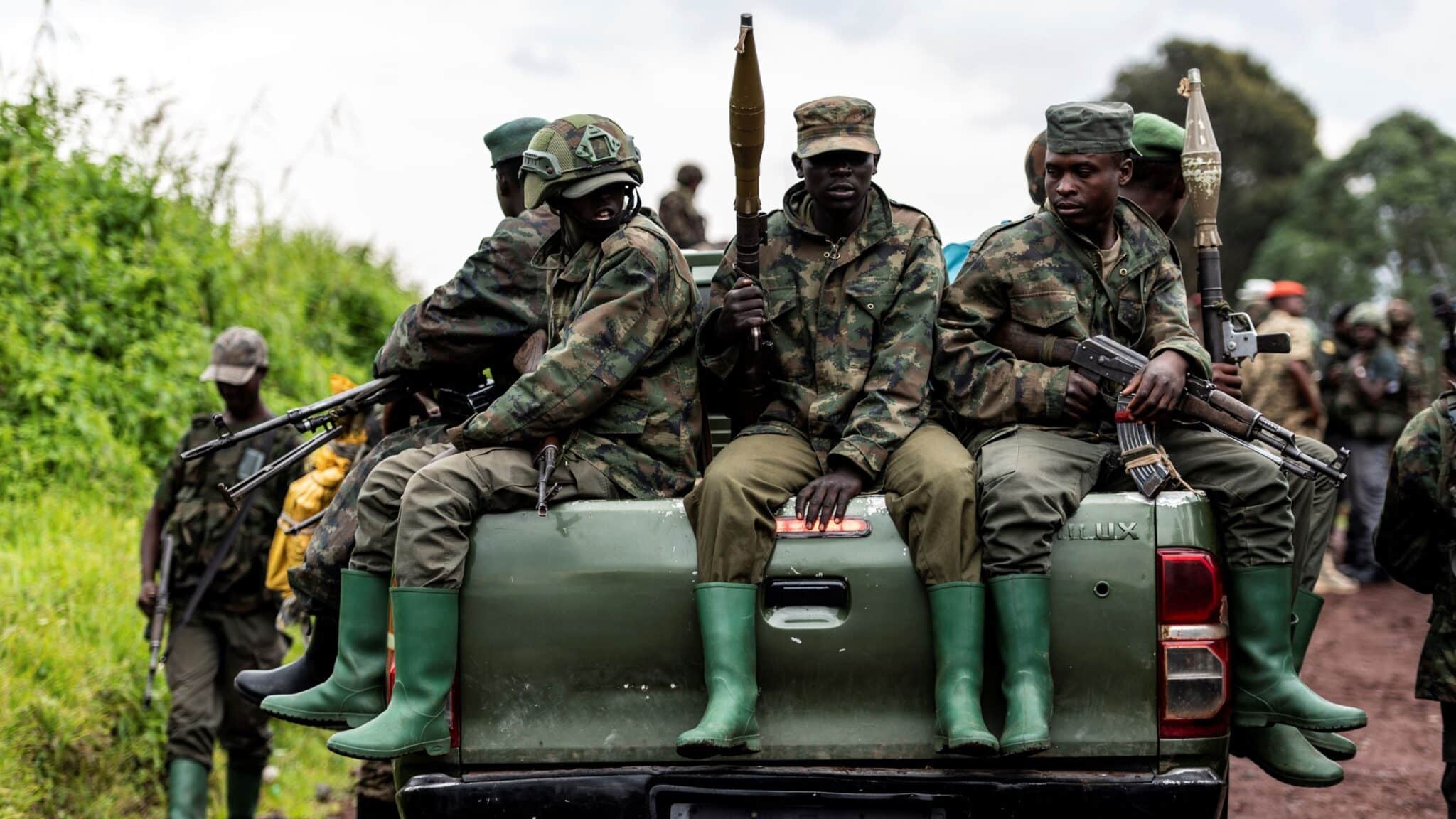
The Congolese army (FARDC) has accused the M23 rebel group and its allies of killing 50 civilians in the eastern town of Kishishe, about 70 km north of Goma, on Tuesday.
Army spokesperson Gen Sylvain Ekenge said M23 was “carrying out massacres … the most recent of which is that of 50 Congolese civilians, heinously murdered on Tuesday in Kishishe.”
He said FARDC had maintained the truce, but rebels had attacked government positions.
M23 leader Bertrand Bisimwa said the group would respond later. The UN and Human Rights Watch said they were aware of killings in Kishishe, but could not yet confirm the number of fatalities.
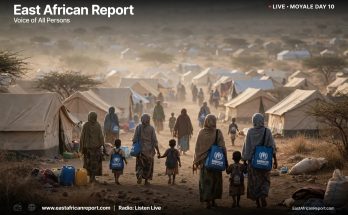
Tens of thousands of people have been displaced by the resumption of fighting last month — the most serious offensive in eastern DRC since 2012.
Fresh Fighting in North and South Kivu
Fresh fighting was reported on Thursday across several locations in North and South Kivu, raising fresh concerns about efforts to secure a ceasefire.
Clashes between FARDC, allied Wazalendo militia fighters and the Front for the Refoundation of the Nation (FRN) were reported in:
– Kilongo and Mahanga, Masisi Territory, North Kivu
– Kibati, Walikale Territory, North Kivu
– Nyamarhege, Lulaba and Chulwe, Nzibira Sector, South Kivu
– Kasika, Walungu Territory, South Kivu
FRN spokesperson Lawrence Kanyuka confirmed the fighting, accusing government forces and Wazalendo allies of launching attacks using combat drones, fighter jets, heavy artillery and ground troops.
M23 Is Now FRN — Led by Kabila
On 12 October 2026, M23 joined a new front — the Front for the Refoundation of the Nation (FRN) — chaired by former President Joseph Kabila.
The FRN succeeded the Congo River Alliance (AFC)/M23 coalition. Corneille Nangaa, former AFC coordinator, is now one of the vice-presidents of FRN, alongside Bertrand Bisimwa.
In spring 2026, M23’s fighting force numbered around 30,000, according to UN experts. The area held by M23 grew by more than 35% between March 2025 and spring 2026.
Washington and Doha: Two Paths, No Peace
Washington process: On 27 June 2025, DRC and Rwanda signed a peace agreement in Washington. On 4 December 2025, Presidents Félix Tshisekedi and Paul Kagame’s signed the Washington Accords for Peace and Prosperity, adding a regional economic framework.
Doha process: In Qatar, Kinshasa and M23 committed to a ceasefire in July 2025, then on 15 November 2025 agreed a peace framework of eight protocols — only two had been signed at that time.
Neither process has silenced the guns.
The UN Security Council, in Resolution 2773, describes direct support from the Rwandan army to M23. Kigali denies it and cites defensive measures.
Kigali accuses Kinshasa of failing to neutralise the FDLR, a Rwandan armed group that has fought alongside the Congolese army, according to the UN.
On 28 October 2026, the US Treasury sanctioned the Rwandan Ministry of Defence and Zigama, a Rwandan financial institution. On 2 November, Washington announced its intention to remove Rwanda from AGOA from 1 January 2027.
MONUSCO Meets Kabila in Goma
On 3 November 2026, James Swan, head of MONUSCO, met former President Joseph Kabila in Goma — the first publicly reported engagement since Kabila emerged as leader of FRN.
According to MONUSCO, discussions focused on peace initiatives, respect for the ceasefire and efforts to achieve a peaceful resolution.
Bisimwa reiterated the movement’s commitment to the Doha peace process but expressed concerns over delays in implementing agreements.
MONUSCO’s mandate was extended by UN Security Council Resolution 2808 until 20 December 2026, with technical and logistical support for ceasefire monitoring.
AU-EU Demand Withdrawal
On 6 November, the African Union and European Union, meeting in Addis Ababa, called for:
– Immediate and unconditional cessation of hostilities
– Full implementation of UN Security Council Resolution 2773 (2025), including unconditional withdrawal of Rwandan Defence Forces from DRC territory and an end to their support for M23
– Congolese military to stop supporting armed groups, particularly FDLR
– Dismantling of the parallel administration backed by M23
– Protection of civilians and humanitarian workers
What To Watch
East African Report will continue to follow:
– Will the Kishishe killings be independently verified?
– Will the FRN under Kabila advance towards Uvira or hold its positions?
– Will Washington and Doha produce a real ceasefire, or another paper deal?
– Will MONUSCO’s mandate be renewed after 20 December?
– How many more civilians will be displaced in North and South Kivu?
Stay with East African Report — RADIO • Media — for original stories from DRC and East Africa.
© EastAfricanReport.com / Radio / TV