
Robert Kabera Murder: 25 Days On, No Arrests as Uganda Investigation Faces Questions
The killing of former Rwandan soldier and government critic in Mpigi remains unresolved, with his missing head, pending forensic findings and competing political claims keeping attention on the investigation.
Twenty-five days after Robert Kabera was found beheaded in Uganda’s Mpigi District, no arrests have been publicly confirmed. His missing head, forensic findings and political claims remain central to the investigation.
MPIGI, Uganda — November 11, 2026
Twenty-five days after the body of former Rwandan soldier Robert Kabera was discovered without a head in Mpigi District, Uganda, the circumstances surrounding his killing remain unresolved.
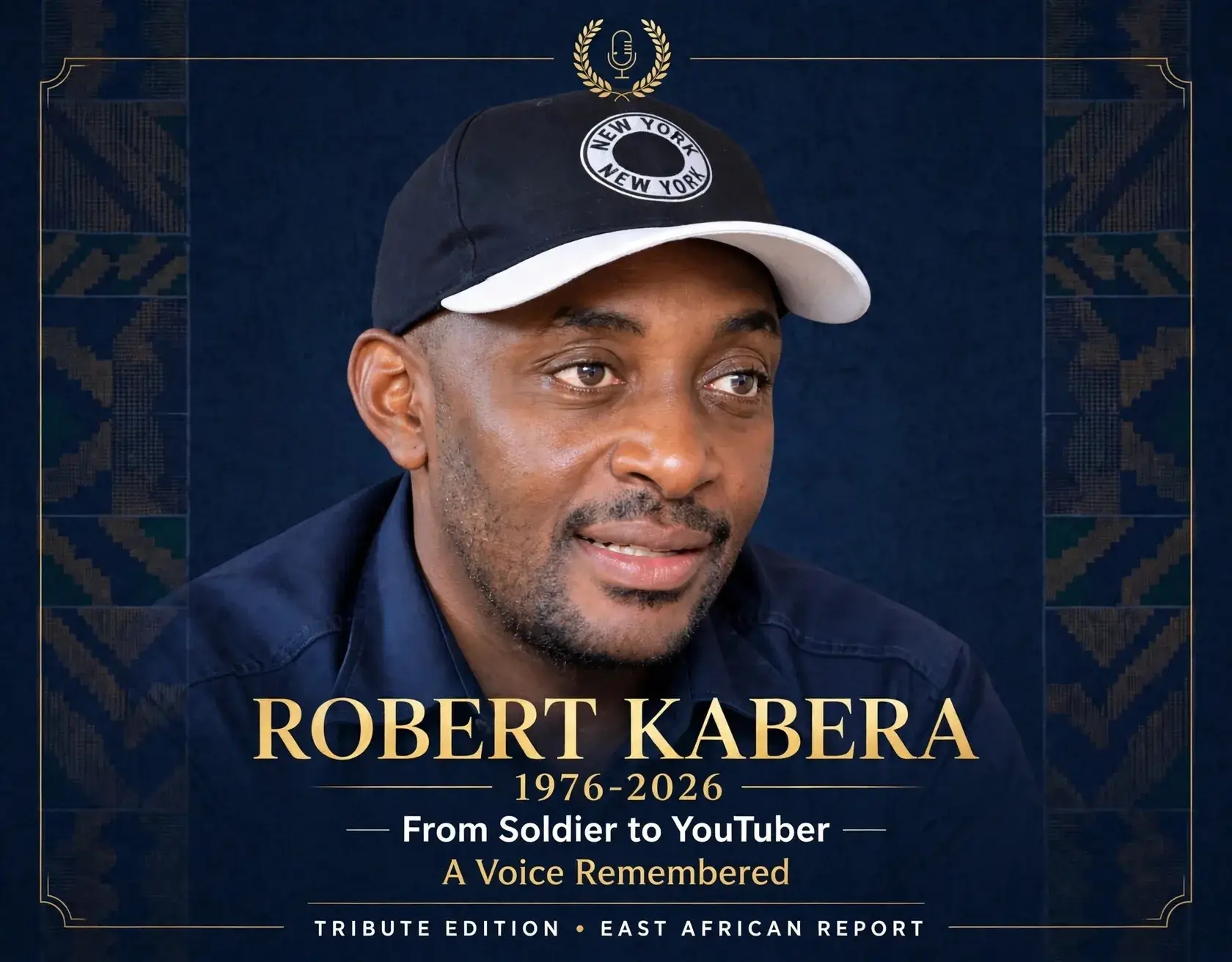
Kabera, 50, popularly known as “Sergeant Robert” and “Major Robert,” was found dead on October 17, 2026, in a eucalyptus plantation in Luwala village, Kamengo Sub-county, where he had reportedly been constructing a house.
His head had been removed and had not been recovered at the time of the latest publicly available reports reviewed for this article.
Ugandan authorities have not publicly announced an arrest or established an official motive for the killing. The case has attracted attention from human rights organisations, Rwandan exile communities and political figures in the region.
The central question remains: who killed Robert Kabera, and why?
Ugandan police confirmed that Kabera’s body was discovered on Saturday, October 17, in Luwala village, Mpigi District.
Police spokesperson Kituuma Rusoke said the body had been recovered without the head and that relatives had identified the deceased as Kabera. Authorities indicated that scientific procedures would be followed as part of the identification and investigation process.
Investigators initially believed the killing may have occurred during the night of October 16 or in the early hours of October 17.
Residents reportedly discovered the remains and alerted the police. Kabera’s relatives had also become concerned after he stopped communicating as regularly as he usually did.
Police said they were investigating the murder and other circumstances surrounding Kabera’s life.
However, the recovery of the missing head, the identification of those responsible and the establishment of a motive remain among the most important unresolved issues.
2. FORENSIC EVIDENCE: IMPORTANT QUESTIONS REMAIN
The forensic examination is a critical part of the investigation.
In its October 22 statement, Human Rights Watch said it had reviewed videos and other evidence relating to the handling of Kabera’s body. The organisation also cited a forensic medical expert who raised concerns about injuries and marks visible in the material.
According to HRW, the expert considered that the body may have been mutilated after death and that marks around the wrists could suggest Kabera’s hands had been restrained.
These observations are not a substitute for an official postmortem report or a judicial finding. They are, however, matters that investigators should examine carefully.
Human Rights Watch also reported that Ugandan police had requested a postmortem examination, with the results not yet available when the organisation issued its statement.
East African Report’s previous coverage reported that seven witnesses had been questioned in connection with the case. The publication also reported that the forensic findings had not been made public by November 9.
The public still needs clear answers to several questions:
Has the postmortem examination been completed?
What do the forensic findings establish about the cause and timing of death?
Has the missing head been recovered?
Have investigators identified the person or people who were last with Kabera?
Have police identified any suspects?
Until the relevant findings are officially released, conclusions about the precise circumstances of the killing should be treated with caution.
3. WHO WAS ROBERT KABERA?
Kabera was a former member of the Rwanda Defence Force and was known as a military instructor and musician.
He was also recognised by many Rwandans through his online commentary, particularly videos published on his YouTube channel, Major Robert TV, in which he criticised the Rwandan government.
Kabera left Rwanda for Uganda in November 2020, saying that he feared for his safety.
Human Rights Watch later documented his security concerns. In a May 2023 letter to the organisation, Uganda’s Inspector General of Police reportedly confirmed that Kabera had been granted asylum on the basis of his claims of political persecution and had received additional protection from Ugandan security agencies.
so documented earlier security incidents involving Kabera in Uganda, including his arrest in May 2022 and an assault later that year.
His background is relevant to understanding why human rights organisations have called for investigators to examine every possible motive. However, his political activities alone do not establish who killed him or why.
4. MUHOOZI’S RNC ALLEGATION: WHAT IS KNOWN?
On October 27, Uganda’s Chief of Defence Forces, General Muhoozi Kainerugaba, publicly expressed suspicion that elements linked to the Rwanda National Congress (RNC) could have been involved in Kabera’s killing.
Muhoozi raised the possibility that the murder could have been retaliation for the arrest of former Ugandan military intelligence chief Major General Abel Kandiho.
He wrote that he suspected certain elements of Kayumba Nyamwasa’s RNC and questioned whether the killing could be connected to Kandiho’s arrest.
However, Muhoozi did not publicly provide evidence establishing that the RNC or any individual associated with it was responsible.
The RNC, an opposition organisation founded by former Rwandan officials including exiled General Kayumba Nyamwasa, had earlier said Kabera was not a member of the organisation and called for justice and a credible investigation.
As of the latest public information reviewed for this article, Uganda Police had not publicly identified the RNC as responsible for the killing.
The allegation must therefore remain an attributed political claim, not an established finding.
Only evidence produced through a credible investigation can determine whether the claim has any factual basis.
5. HUMAN RIGHTS WATCH CALLS FOR AN IMPARTIAL INVESTIGATION
On October 22, Human Rights Watch called on Ugandan authorities to conduct a prompt, impartial and credible investigation into Kabera’s killing.
The organisation said investigators should examine all available evidence, including evidence that could point to a possible politically motivated murder.
HRW also raised wider concerns about the safety of Rwandans who have fled their country and are living abroad.
Its concerns are significant because Kabera had previously reported threats and security problems while living in Uganda.
The organisation’s position does not establish that the murder was politically ordered. Rather, it places an obligation on investigators to examine all credible possibilities without prematurely excluding any line of inquiry.
A credible investigation should be transparent about its progress while protecting witnesses, evidence and the rights of everyone involved.
6. FEAR AMONG RWANDAN EXILES
Kabera’s death has also raised concerns among Rwandan refugees and other exiles living in the region.
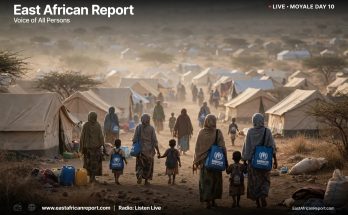
In previous reporting, East African Report documented concerns expressed by Rwandan refugees in Kakuma, Kenya, about their safety following the killing.
Some individuals told the publication that they feared speaking openly about political issues and were worried about possible threats.
East African Report is not identifying those individuals in order to protect their safety.
These concerns deserve attention from Ugandan authorities and organisations responsible for refugee protection.
People seeking asylum or living in exile should be able to express their views without fear of violence, intimidation or unlawful targeting.
At the same time, individual security concerns should be assessed carefully, and specific allegations should be investigated rather than treated as established facts without supporting evidence.
7. THE QUESTIONS UGANDA’S INVESTIGATION MUST ANSWER
Twenty-five days after Kabera’s death, several questions remain central to the case:
First: Where is the missing head?
Its recovery could provide important forensic evidence and help investigators establish what happened.
Second: What does the forensic report reveal?
The public needs to know whether the postmortem examination has been completed and whether its findings support or rule out particular explanations.
Third: Who was with Kabera before his death?
Investigators need to establish the movements of the victim during his final hours and identify anyone who may have information relevant to the killing.
Fourth: Have any suspects been identified or arrested?
Police should clarify the progress of the investigation without compromising evidence or witness safety.
Fifth: Is there evidence of a political motive?
Investigators should examine Kabera’s reported threats, his public criticism of the Rwandan government and any other relevant evidence. They should also examine alternative explanations rather than assume a motive in advance.
Sixth: What evidence supports the claims made by political figures?
Public allegations should be tested against verifiable evidence. No political organisation or individual should be declared responsible without credible proof.
Seventh: What protection is available to vulnerable Rwandan exiles in Uganda?
Kabera’s earlier asylum status and reported security concerns make this an important question for the relevant Ugandan authorities and refugee-protection institutions.
8. JUSTICE MUST BE BASED ON EVIDENCE
The killing of Robert Kabera is not simply a question of political accusations or competing public statements. It is a murder investigation in which a family is still waiting for answers.
Uganda has a responsibility to investigate the killing effectively, preserve evidence, protect witnesses and bring anyone responsible before a competent court.
The investigation should be independent, professional and free from political interference.
It should also distinguish clearly between verified facts, witness accounts, expert observations and allegations made by political actors.
For Kabera’s family, the most urgent demand is straightforward: establish what happened, identify those responsible and ensure justice.
For Rwandan refugees and other exiles living in Uganda, the case raises a wider concern about whether people who have sought protection can live safely.
Twenty-five days have passed. The missing head, the unpublished forensic findings and the absence of publicly confirmed arrests leave major questions unanswered.
East African Report will continue following the investigation and will update this report when new, verifiable information becomes available.
EDITORIAL NOTE: This report distinguishes between information confirmed by Ugandan police, findings and concerns reported by Human Rights Watch, previous reporting by East African Report, and political allegations that have not been independently established. No individual or organisation is presented as responsible for Kabera’s murder without verified evidence.
By : Staff East African Report/Sweden office /Uganda /Kenya