
FULL STORY:
KIGALI / KAMPALA — On the night of October 1, 1990, a force of about 4,000 Rwandan exiles crossed the Uganda-Rwanda border at Kagitumba. At its head was a 33-year-old Major General in the Ugandan Army, wearing his trademark camouflage and red beret. His name was Fred Gisa Rwigema.
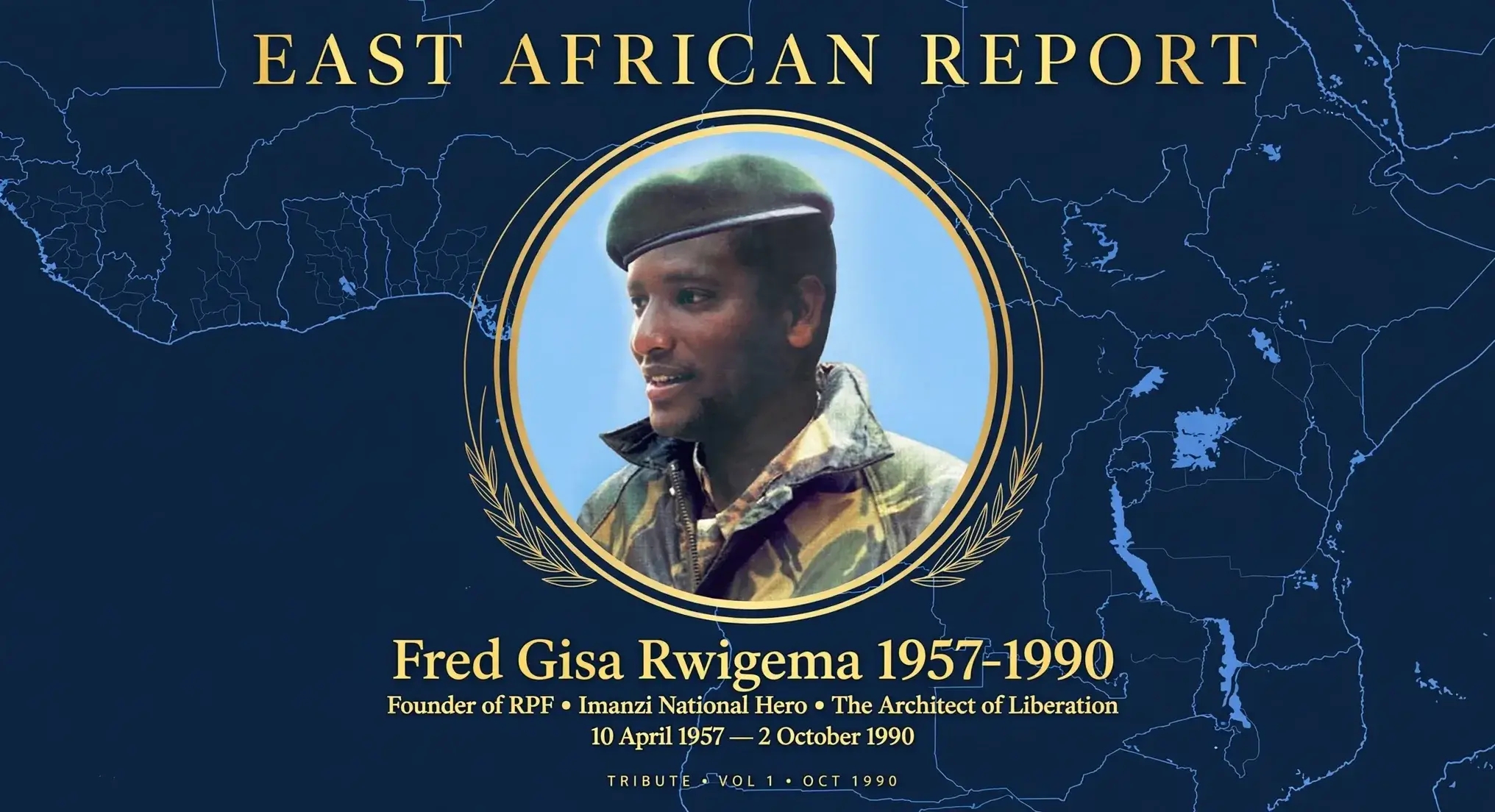
Less than 36 hours later, he was dead on Matimba Hill — a death that would change the course of Rwandan history.
Born Emmanuel Gisa on April 10, 1957, in Mukiranze village, Kamonyi District (former Gitarama), Rwigema was a child of the 1959 Revolution. His parents, Anastasi Kimonyo and Gatarina Mukandilima, fled with him to the Nshungerezi refugee camp in southwestern Uganda. It was in exile that his political identity was forged.
The Making of a Guerrilla:
After finishing high school in 1976, Rwigema left for Tanzania to join FRONASA, the rebel group led by Yoweri Museveni. In the same year, he traveled to Mozambique to fight alongside FRELIMO against Portuguese colonialism.
In 1979, he joined the Uganda National Liberation Army (UNLA) that, together with Tanzanian forces, overthrew Idi Amin. When Museveni launched his own guerrilla war in 1981 against Milton Obote, Rwigema was among the original 27 fighters of the National Resistance Army (NRA) — alongside a young intelligence officer named Paul Kagame.
When the NRA took power in 1986, Rwigema was rewarded: Deputy Minister of Defence, Deputy Army Commander, and Member of Parliament. On February 6, 1988, President Museveni promoted him to Major General.
But his eyes were always on Rwanda.
Founding the RPF:
In December 1987, Rwigema chaired the meeting in Kampala that transformed the Rwandese Alliance for National Unity (RANU) into the Rwandan Patriotic Front (RPF-Inkotanyi). Its mission was clear: the return of Rwandan refugees and reform in Kigali.
On June 20, 1987, he had married Jeannette Urujeni. They would have two children, Eric Gisa Rwigema and Teta Gisa Rwigema.
The Final Offensive:
On October 1, 1990, citing persecution and denial of citizenship for refugees, Rwigema led the RPF invasion. His experience made him the natural choice to command.
On October 2, on the heights of Matimba Hill, Rwigema was killed by a gunshot wound. The circumstances remain debated to this day — official RPF history records he was killed by enemy fire, while other accounts cite an accident or internal dispute. The RPF command concealed his death for a month to preserve morale, with Major Peter Bayingana and Major Chris Bunyenyezi briefly taking command before Paul Kagame returned from the US to lead.
His body was initially buried in Kagitumba before being reinterred at the Heroes Cemetery in Remera, Kigali, next to the Tomb of the Unknown Soldier.
The Imanzi Legacy:
Today, Rwigema is classified as an Imanzi — the supreme category of Rwandan National Heroes, defined by supreme sacrifice. Every February 1 (Heroes Day), July 4 (Liberation Day), and October 1-2, archival footage resurfaces: Rwigema in 1985 with the NRA 11th Battalion in Fort Portal, his original voice addressing cadres, and his black-and-white portrait in beret.
For the new generation that never saw war, Fred Gisa Rwigema remains the foundational narrative of modern Rwanda: a refugee who became a general, who left a comfortable position in Uganda to lead his people home — and paid the ultimate price on Day Two.