
By: East African Report |Sweden Desk Office | 17 November 2026
BUJUMBURA / KIGALI — Two countries that look alike. One language. One culture. One border of 315 kilometres.
But for almost 3 years, the border has been closed. Presidents accuse each other. Bishops are asking for it to be reopened.
What happened between Burundi and Rwanda?
1. IT STARTED IN 2015
It all started in 2015, when Burundi’s President Pierre Nkurunziza sought a controversial third term.
Violence erupted. People died, others fled.
Rwanda said Rwandans living in Burundi were being abused.
Burundi expelled Rwanda’s Ambassador, Desire Nyaruhirira, accusing him of planning to destabilise the country.
Since then, relations have been frozen.
2. 2022: A SMALL HOPE
In 2022, there was hope.
Burundi’s Foreign Minister, Albert Shingiro, came to Nemba-Gasenyi to meet Rwanda’s Vincent Biruta.
They agreed to continue dialogue to restore relations.
Burundi said: “We have come to show our will to restore relations.”
Rwanda said: “We are ready to do everything possible to make relations good.”
The border reopened slightly. People started crossing.
But the hope did not last long.
3. THE RED-TABARA ATTACK — DECEMBER 2023
In December 2023, the RED-Tabara group claimed an attack near Burundi’s border with Congo.
20 people died, including women and children.
Burundi’s President Evariste Ndayishimiye said Rwanda supports RED-Tabara.
Rwanda denied it, saying: “There is no truth whatsoever in this.”
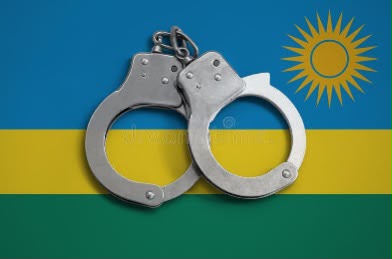
On 11 January 2024, Burundi closed its entire border with Rwanda.
Burundi’s Interior Minister, Martin Niteretse, said:
> “Today we closed the borders. And someone who will go there will not pass.”
Rwanda learned about it through the media. It said the decision “violates the principles of the East African Community.”
4. NDAYISHIMIYE SAID: “KAGAME HAS A PLAN TO ATTACK US”
In March 2025, Ndayishimiye told the BBC:
> “We know that he has a plan to attack Burundi. Burundians will not accept to be killed as Congolese are being killed. Burundian people are fighters.”
He said he had “credible intelligence” that Kagame was planning to attack Burundi.
He added: “But we do not have a plan to attack Rwanda. We want to resolve the problem through dialogue.”
Rwanda called those remarks “unfortunate.”
Rwanda’s Foreign Minister, Olivier Nduhungirehe, said both countries had already agreed on military and verbal de-escalation.
5. KAGAME SAID: “I DON’T TELL LIES LIKE HE DID TO ME”
On 24 August 2026, Kagame answered in a press conference in Kigali.
He said Ndayishimiye lied to him.
He said he called him and asked whether Burundian forces were in North Kivu in Congo.
Ndayishimiye denied it and said: “We have no troops there.”
Kagame said:
> “A couple of weeks after, his forces were captured in North Kivu.”
> “There is no commitment we ever made that we did not fulfill, not with the president of Burundi, or anybody else.”
> “I don’t tell lies like he did to me.”
Burundi demands that Rwanda extradite people it accuses of trying to overthrow the government in 2015. Rwanda has refused.
6. CONGO — WHERE THEY FIGHT
The biggest problem is Congo.
The UN says Rwanda supports M23. Rwanda denies it.
Burundi has troops in Congo — reported to have reached 18,000 in 2025, before reducing after the fall of Uvira.
Burundi fights alongside Congolese forces against M23.
Rwanda says Burundi supports FDLR — a group that includes perpetrators of the 1994 Genocide.
Burundi says M23 is like Rwanda’s army.
In recent weeks, officials from both countries met and agreed that Rwandan forces and M23 would not occupy Uvira — a town close to Bujumbura.
7. EVEN THOUGH THE BORDER IS CLOSED, TRADE CONTINUES
Surprisingly, even though the border is closed, trade has not stopped completely.
In the second quarter of 2026, Rwanda exported goods worth $13.39 million to Burundi — up from $6.55 million in the first quarter.
These are food, construction materials, and re-exported goods.
People continue to cross through small paths, by air — flights continue — and through small borders like Ruhwa.
8. BISHOPS CALL FOR PEACE
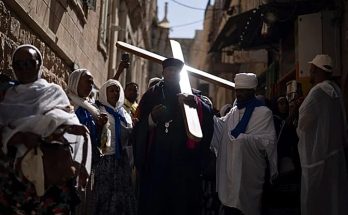
On 12 November 2026, Catholic Bishops from Rwanda and Burundi met in Bujumbura in the ACOREB meeting.
They asked for the borders to be reopened.
> “We regret that the land borders connecting Rwanda and Burundi remain closed. We are concerned that this decision continues to affect the populations of both countries. We reiterate our appeal to our respective governments to continue dialogue aimed at improving relations between the two countries and reopening the borders.”
Cardinal Antoine Kambanda, Archbishop of Kigali, said that despite the border closure, bishops try to meet twice a year.
Bishop Joachim Ntahondereye of Muyinga said:
> “No rain falls forever. The problems that caused the border to close will also pass, people will move again, work together and help each other as before.”
CONCLUSION
Burundi and Rwanda are like brothers who disagree.
They share language, culture, and painful history.
The border is closed. Harsh words have been spoken. Troops have been sent to Congo.
But trade continues. Bishops still meet. Citizens still want to meet.
The remaining question is: Will the presidents agree and reopen the border, or will bishops keep asking for what politicians refuse?
East African Report